

Every September, the New York real estate market seems to wake up. Buyers return from summer, sellers launch new listings, and renewed energy fills the air.
Spoiler alert: the season alone does not sell an apartment.
Some homes attract immediate attention, generate strong offers, and move quickly to contract. Others linger for months while their sellers wonder what went wrong. And while every property is different, the reasons are usually not mysterious. More often than not, it comes down to three things: pricing, presentation, and positioning.
This fall, all three matter more than usual.
A Changed Backdrop
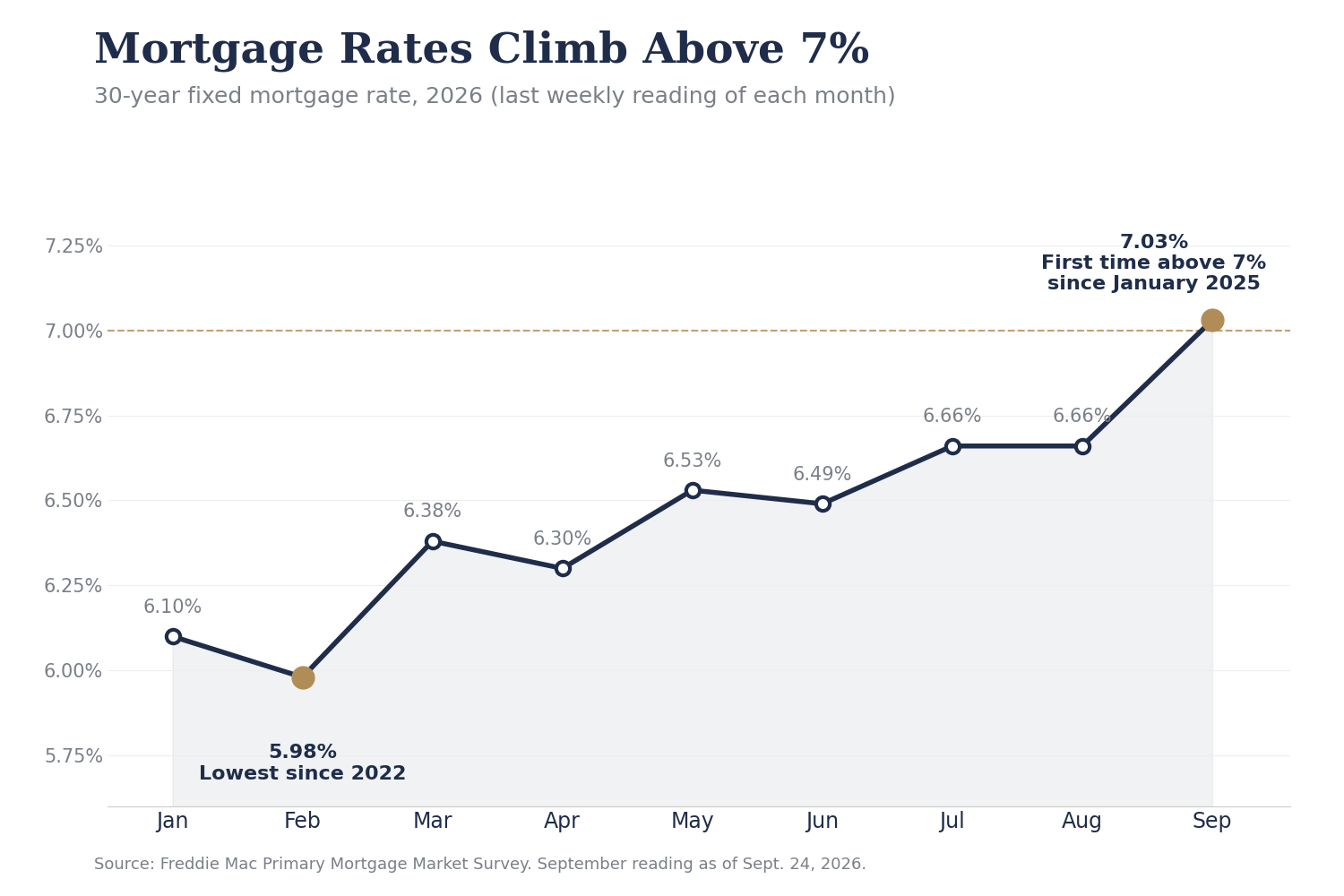
In February, I wrote that mortgage rates had finally dipped below 6%. That picture has changed dramatically. According to Compass Chief Economist Mike Simonsen's summary, this month the 10-year Treasury yield climbed above 5.1%, its highest level since 2007. Mortgage rates increased to nearly 7.25%, the highest in 28 months. And the Fed raised rates for the first time in three years with more bond market hikes expected in October and December.
Buyers have noticed. Nationally, pending sales over the past four weeks are running about 4% below last year, with the weakness concentrated at lower price points. The luxury segment is holding up better, supported by a strong stock market, and remains ahead of 2025. Inventory is growing again, and prices are holding steady, up about 1.5% year over year.
Just as important: this is not a distressed market. Delinquencies and foreclosures remain very low. But with more inventory and more rate-sensitive buyers, the margin for error is thinner. Buyers have more choices and less urgency, and little reason to pursue properties that don't feel right.
Pricing Creates the First Impression
A new listing has its most attentive audience in its first few weeks. Serious buyers, and the agents representing them, watch new inventory closely. They know the market, they have seen the comparables, and they recognize value when it appears.
Price it correctly and you create interest. Create enough interest, and you create competition. That sense of urgency can lead to multiple offers.
When a property launches too high, the opposite happens. Buyers don't make low offers; they simply move on. By the time the price is adjusted, the momentum is gone, and the listing has acquired a history that buyers notice. A price reduction rarely recreates the excitement of a fresh launch.
Pricing a home to "test the market" usually tests everyone's patience instead. The goal is not to leave room for negotiation. It is to set a price that invites it.

Presentation Is More Than Decoration
Today's buyers form their first impression long before they walk through the door. It happens online, often on a phone, in the few seconds it takes to scroll through the photos and floor plan.
That's why preparation matters so much. Fresh paint, thoughtful repairs, good lighting, decluttering, and professional staging are not cosmetic extras. They help buyers picture their own lives in the space rather than the life of the current owner.
This is especially true in co-ops, where buyers are increasingly wary of renovation time, board approvals, and costs. With borrowing costs higher, few buyers want to finance a renovation on top of a purchase. A home that feels move-in ready removes a layer of uncertainty, and buyers will pay for that certainty.
Positioning Means Knowing the Marketplace and the Buyer
Positioning is the least visible of the three strategies, and often the most overlooked. It means understanding exactly where a property fits in the current market: which competing listings buyers will compare it with, who the most likely buyer is, and what will matter most to that person.
A classic six on Park Avenue and a renovated two-bedroom on the Upper West Side attract very different buyers with different priorities. The marketing, photography, floor plan, and even the description should speak directly to the right audience.
Less obvious factors also matter: a five-year history of maintenance, common charges, and assessments; renovation rules; financing restrictions; and any pending litigation. Buyers and their attorneys will find these details eventually, so it's better to understand and address them from the start.
Positioning also continues after an offer is accepted. In co-ops, a carefully prepared board package, with clear financials, strong letters, and thoughtful attention to detail, can be the difference between a smooth closing and an anxious wait.
What This Means for Buyers
The same principles work in reverse. When a well-priced, beautifully presented home appears, it may not stay available long, even in a higher-rate environment. Preparation is essential. Have your financing in place and understand how today's rates affect your budget, know your priorities, and be ready to act when the right property comes along.
Listings that have lingered can also offer opportunity. A property that has been sitting may simply have been mispriced or poorly presented, and the right buyer may see potential others missed. With inventory rising, patient and prepared buyers may find room to negotiate.
The Bottom Line
Fall brings energy and clients back to the market, but energy alone doesn't create results for buyers or sellers. Homes that sell quickly almost always share the same foundation: realistic pricing from day one, presentation that makes buyers feel at home, and positioning aimed at the right audience.
The strongest selling strategies are rarely static. They adjust when the evidence tells us to adjust, and this September, the evidence has shifted. There is no formula that guarantees a bidding war or a quick sale, but there is a great deal we can do upfront to improve the odds.
If you're considering a sale or purchase this fall, or thinking ahead to spring, the best time to begin planning is now. We would be delighted to start that conversation.
For weekly insights, visit my video series “45 Years, 45 Insights” on YouTube.
Wishing you and yours a beautiful autumn season. — Shirley